We Offer a Range of Environmental
Residential Services
Our Services
Hazardous Materials Assessment
A Hazardous Materials Assessment is a critical step in any renovation, demolition, or property acquisition project. This specialized investigation is designed to identify and quantify potentially harmful materials that may be hidden within a building's structure or systems.
By conducting a thorough evaluation, property owners can ensure regulatory compliance, protect the health of occupants, and avoid the significant health, financial, and legal risks associated with improper handling of toxic materials.
Core Components of the Assessment
The assessment focuses on the "Big Five" environmental concerns found in older structures:
1. Asbestos: Identifying asbestos-containing materials (ACMs) in building materials such as insulation, floor tiles, and drywall compounds that can release carcinogenic fibers if disturbed.
2. Lead-Based Paint: Locating lead-pigmented coatings that pose severe neurotoxic risks, particularly during sanding or demolition.
3. Mercury: Pinpointing mercury-containing components such as thermostats, switches, and high-intensity discharge lamps.
4. PCBs (Polychlorinated Biphenyls): Evaluating older electrical equipment, such as light ballasts and transformers for pollutants.
5. Mould: Inspecting for fungal growth resulting from water intrusion or poor ventilation, which can severely impact indoor air quality and respiratory health.

Why It Matters
Ignoring these hazardous materials can lead to environmental contamination and long-term health effects. A professional assessment provides the necessary data to create a safe abatement plan, ensuring that hazardous waste is managed and disposed of according to local and provincial legislative standards.
.jpg)
Asbestos Testing Laboratory
IHS offers asbestos material and air sample analysis through our own laboratory, eliminating the need to ship samples, therefore reducing turn- around time for client results and reports.
Polarized Light Microscopy (PLM) is the industry-standard test method for identifying asbestos in "bulk" building materials—the physical pieces of insulation, flooring, or drywall found in your property.
Unlike a standard microscope, a PLM microscope uses specialized light filters to reveal the unique optical "fingerprint" of different types of asbestos. This allows a trained analyst to not only confirm if asbestos is present, but also to determine the specific type (such as Chrysotile, Amosite, or Crocidolite) and its percentage by dry weight within the material.
Phase Contrast Microscopy (PCM) air monitoring is a standard, cost-effective method used to measure the concentration of airborne fibers, primarily to assess asbestos safety. It is the most common technique for routine air testing during and after renovation or abatement projects. This technique is also useful for assessing ambient fibre concentrations as well.


*Chain of Custody Form refers to a legal laboratory form which documents when the sample was collected, analyzed, and disposed of. All PLM samples submitted require completion of this form.
Lead Paint Testing
Flame Atomic Absorption (FAA) Spectrometry is a highly precise laboratory method used to determine the exact concentration of lead within paint samples. While onsite screening tools (like XRF guns) provide quick results, FAA testing is the "gold standard" for accuracy, often required for regulatory compliance.
The process involves "digesting" a small chip of paint in acid and atomizing it in a high-temperature flame. By measuring how much light the lead atoms absorb, the lab can calculate the lead content with extreme sensitivity, typically down to parts per million (ppm) or percentage by weight.
Lead Leachate Testing is a specialized laboratory analysis used to determine the "leachability" or mobility of lead from solid materials into the environment. Unlike an FFA test, which measures the absolute amount of lead present, leachate testing simulates how much lead will actually dissolve and migrate if the material is exposed to landfill conditions or environmental elements like acid rain. Lead leachate testing is required prior to the disposal of lead contaminated waste.


Mould Testing
Mould Sampling is a vital part of an environmental assessment, helping to identify the types and concentrations of mould spores present in your indoor environment. To provide a complete picture of your property’s health, we utilize two primary testing methods: Air-O-Cell (airborne) and Tape-Lift (surface) sampling.
Air-O-Cell Sampling (Measuring Airborne Spores)
Air-O-Cell sampling is used to assess ambient mould spore concentrations. This method uses a specialized "spore trap" cassette and a calibrated vacuum pump to pull a specific volume of air through the sample media.
-
How it works: Airborne particulates—including mould spores, pollen, and dust are captured on a sticky glass slide inside the cassette.
-
The Result: A laboratory analysis provides a "spore count," allowing a comparison between indoor and outdoor mould spore concentrations. This helps determine if there is excessive mould growth inside the building.
Tape-Lift Sampling (Surface Growth Determination)
When visible staining or suspected mould growth is present on a surface (i.e. drywall, wood, or concrete), a Tape-Lift sample is the most effective way to identify whether mould is present.
-
How it works: A piece of specialized, laboratory-grade clear adhesive is pressed against the suspect growth and then placed on a microscope slide.
-
The Result: This method preserves the structure of the mould, allowing the laboratory technicians to identify the specific genus of the mould.
Potable Water Sampling
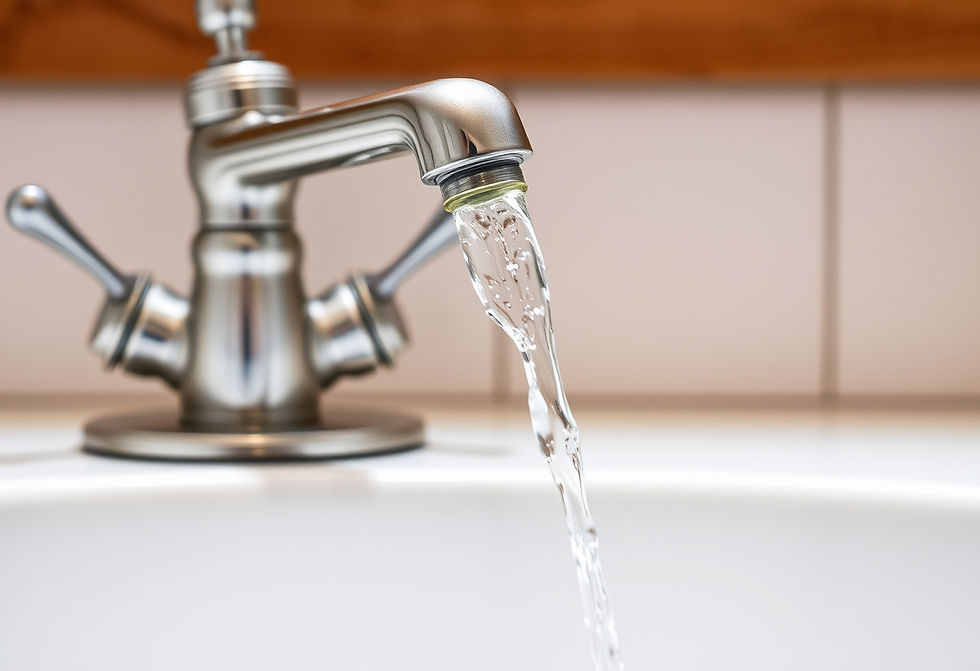
Potable water sampling is essential in ensuring that drinking water is safe for human consumption. Systematically collecting and testing water samples allows for the identification of potential contaminants (organic and inorganic), monitor the effectiveness of treatment processes, and ensure compliance with health standards.
Analysis typically categorizes water quality into three main areas:
-
Microbiological: Testing for indicator organisms like E. Coli and Total Coliforms to detect potential fecal contamination.
-
Chemical: Monitoring for heavy metals (like lead and arsenic), disinfection by-products, and nitrates.
-
Physical: Assessing "aesthetic" factors such as turbidity (cloudiness), color, and pH, which can affect the taste.
In Canada, the quality of drinking water is benchmarked against the Guidelines for Canadian Drinking Water Quality (GCDWQ). The GCDWQ are established by the Federal-Provincial-Territorial Committee on Drinking Water and are published by Health Canada. These guidelines set out Maximum Acceptable Concentrations (MAC) for contaminants that are known or suspected to cause adverse health effects.
The guidelines are dynamic, frequently updated to reflect the latest scientific research on health risks and advances in treatment technology.
.jpg)

Radon Testing
Radon is a colorless, odorless, and tasteless radioactive gas that occurs naturally from the breakdown of uranium in soil and rock. While it is harmless when diluted outdoors, it can accumulate to dangerous levels inside homes becoming a significant health risk.
Why You Should Test for Radon
Testing is the only way to determine the radon level in a structure. Because radon enters through cracks in foundations, construction joints, and gaps around service pipes, two identical houses side-by-side can have vastly different concentrations.
-
Leading Risk Factor: After smoking, radon is the primary cause of lung cancer in Canada.
-
Invisible Exposure: You cannot see, smell, or taste radon; high levels can persist for years without residents ever knowing.
-
Long-Term Health Impact: Risk is cumulative. Long-term exposure to elevated levels significantly increases the probability of developing lung cancer, especially for smokers or former smokers.

Indoor Air Quality Assessment (AIQ)
Since most people spend nearly 90% of their time indoors, the quality of the air we breathe has a direct impact on long-term health, cognitive function, and daily comfort. Indoor environments often harbor higher concentrations of pollutants than the outdoors due to off-gassing from building materials, human activity, and inadequate ventilation.
Routine IAQ testing provides a data-driven snapshot of a building’s health, allowing homeowners to identify "silent" issues before they lead to respiratory problems, fatigue, or decreased productivity.
The American Society of Heating, Refrigerating and Air-Conditioning Engineers (ASHRAE) provides the industry-standard benchmarks for maintaining healthy indoor environments, primarily through Standard 62.1 (Ventilation) and Standard 55 (Thermal Comfort).
.jpg)

Energy Efficiency Assessment
An energy efficiency assessment (often called a home energy audit) is a comprehensive evaluation of a home's energy performance. In the Canadian climate—where extreme temperature swings demand heavy heating in the winter and cooling in the summer—these assessments are the first step toward reducing utility costs and carbon footprint.
-
Pinpoint Energy Loss: Using specialized equipment like infrared cameras, consultants find hidden drafts and areas with poor insulation.
-
Customized Action Plan: Instead of guessing, homeowners receive a prioritized list of upgrades (e.g., heat pumps, window replacements, or attic insulation) that will offer the best return on investment.
-
Increased Property Value: Homes with high energy-efficiency ratings are increasingly attractive to buyers.
For the average Canadian household, space heating and water heating account for the vast majority of energy use. By following the recommendations of an assessment, Canadians can:
-
Lower Utility Bills: Significant reductions in monthly heating and cooling costs.
-
Improve Comfort: Elimination of cold drafts and hot spots, leading to more consistent indoor temperatures.
-
Reduce Emissions: Lowering energy consumption directly reduces the greenhouse gas emissions associated with power generation and natural gas combustion.